Product overview
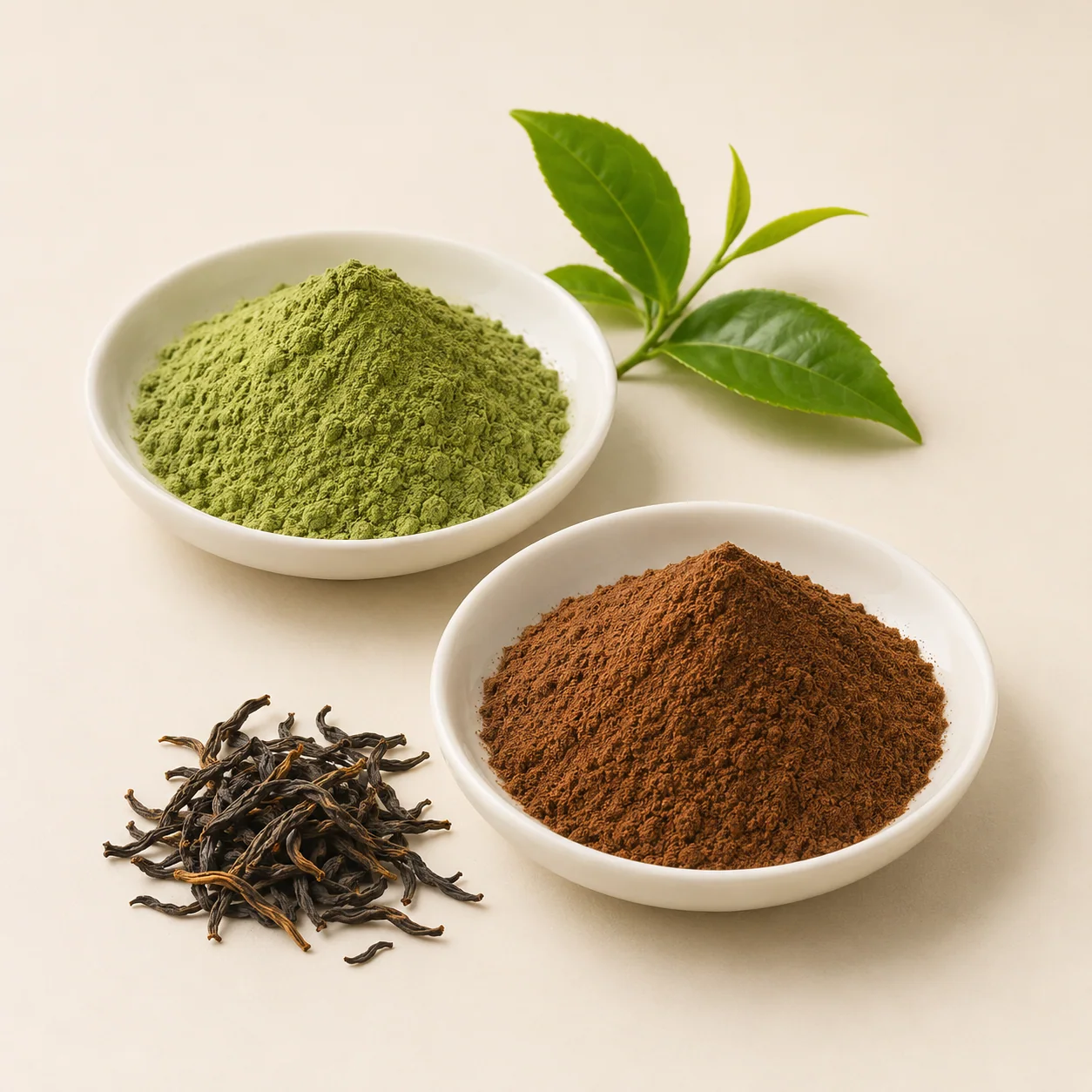
Green tea extract is made from Camellia sinensis leaves. The range is described by constituent profiles rather than one universal assay, with tea polyphenols, catechins, EGCG and caffeine among the listed parameters.
Catalogue examples combine polyphenol and catechin targets with an EGCG minimum. Specify the complete profile and method you need, including any caffeine limit, so comparable grades can be quoted.
Product specifications
| Botanical source | Camellia sinensis leaves |
|---|---|
| Appearance | White to yellow-brown fine powder; grade dependent |
| Methods listed | UV; HPLC |
| Profile example 1 | Tea polyphenols ≥80%; catechins ≥60%; EGCG ≥30% |
| Profile example 2 | Tea polyphenols ≥90%; catechins ≥65%; EGCG ≥35% |
| Profile example 3 | Tea polyphenols ≥95%; catechins ≥70%; EGCG ≥40% |
| Caffeine | Low-caffeine profiles may be specified; confirm selected grade |
Reference information for product selection. The agreed specification and relevant batch documents govern the material supplied.
Applications and sourcing
- Food and beverage ingredient development
- Tea-based formulations
- Application-specific extract blends
Packaging and supply
Specify the constituent profile, required documents, order quantity and preferred packaging. The agreed specification governs the selected grade.
Request product documents
For the selected grade, ask for the product specification and relevant quality documentation. Include your required test methods and destination-market requirements in the inquiry.
Request specifications by email ↗Frequently asked questions
Which details should I include in a quote request?
Please include Green tea extract, the required grade or specification, quantity, destination and any document requirements.
Can I request a specification and quality documents?
Email info@famerise.com with the required grade. Ask for the specification and relevant batch information for the product being quoted.